Pages

Thursday, February 3, 2011

ICC Cricket World Cup 2011


Group A:
Pakistan, Australia, New Zealand, Sri Lanka, Canada, Kenya, Zimbabwe
Group B:
India, England, South Africa, West Indies, Bangladesh, Netherlands, Ireland

  • Every team will play 2 warm-up matches before the start of WC.
  • Pakistan's two warm-up matches are against Bangladesh and England on February 15 and February 18 respectively.
  • Pakistan's all matches are in Sri Lanka and day/night. All will start at 2.00pm PST and 9.00am GMT
  • Top four teams from each group will qualify for Quarter-Final, which would be first knock-out stage of World
    Cup.


Match

Date

Teams

Venue

1

19 Feb

India vs Bangladesh

Dhaka

2

20 Feb

New Zealand vs Kenya

Chennai

3

20 Feb

Sri Lanka vs Canada

Hambantota

4

21 Feb

Australia vs Zimbabwe

Ahmedabad

5

22 Feb

England vs Netherlands

Nagpur

6

23 Feb

Pakistan vs Kenya

Hambantota

7

24 Feb

South Africa vs West
Indies

New Delhi

8

25 Feb

Australia vs New Zealand

Nagpur

9

25 Feb

Bangladesh vs Ireland

Dhaka

10

26 Feb

Sri Lanka vs Pakistan

Colombo

11

27 Feb

India vs England

Kolkata

12

28 Feb

West Indies vs Netherlands

New Delhi

13

28 Feb

Zimbabwe vs Canada

Nagpur

14

1 Mar

Sri Lanka vs Kenya

Colombo

15

2 Mar

England vs Ireland

Bangalore

16

3 Mar

South Africa vs Netherlands

Mohali

17

3 Mar

Pakistan vs Canada

Colombo

18

4 Mar

New Zealand vs Zimbabwe

Ahmedabad

19

4 Mar

Bangladesh vs West
Indies

Dhaka

20

5 Mar

Sri Lanka vs Australia

Colombo

21

6 Mar

India vs Ireland

Bangalore

22

6 Mar

England vs South Africa

Chennai

23

7 Mar

Kenya vs Canada

New Delhi

24

8 Mar

Pakistan vs New Zealand

Pallekelle

25

9 Mar

India vs Netherlands

New Delhi

26

10 Mar

Sri Lanka vs Zimbabwe

Pallekelle

27

11 Mar

West Indies vs Ireland

Mohali

28

11 Mar

Bangladesh vs England

Chittagong

29

12 Mar

India vs South Africa

Nagpur

30

13 Mar

New Zealand vs Canada

Mumbai

31

13 Mar

Australia vs Kenya

Bangalore

32

14 Mar

Pakistan vs Zimbabwe

Pallekelle

33

14 Mar

Bangladesh vs Netherlands

Chittagong

34

15 Mar

South Africa vs Ireland

Kolkata

35

16 Mar

Australia vs Canada

Bangalore

36

17 Mar

England vs West
Indies

Chennai

37

18 Mar

Sri Lanka vs New Zealand

Mumbai

38

18 Mar

Ireland vs Netherlands

Kolkata

39

19 Mar

Australia vs Pakistan

Colombo

40

19 Mar

Bangladesh vs South Africa

Dhaka

41

20 Mar

Zimbabwe vs Kenya

Kolkata

42

20 Mar

India vs West
Indies

Chennai

43

23 Mar

1st QF: A1 v B4

Dhaka

44

24 Mar

2nd QF: A2 v B3

Colombo

45

25 Mar

3rd QF: A3 v B2

Dhaka

46

26 Mar

4th QF: A4 v B1

Ahmedabad

47

29 Mar

First Semifinal will be played between winners of both
Quarter Finals played in Dhaka

Colombo

48

30 Mar

Second Semifinal will be played between winners of
Quarter Finals played in Ahmedabad and Colombo

Mohali

49

02 Apr

FINAL

Mumbai


Sunday, January 23, 2011

Horoscope Hang-Up: Earth Rotation Changes Zodiac Signs


If you're the type of person who relies on mysterious-sounding locations of stars to determine your personality and outcome in life, get ready to be shocked.
The field of astrology, which is concerned with horoscopes and the like, felt a major disruption from astronomers, who are concerned with actual stars and planets. The astronomers from the Minnesota Planetarium Society found that because of the moon's gravitational pull on Earth, the alignment of the stars was pushed by about a month.
"When [astrologers] say that the sun is in Pisces, it's really not in Pisces," noted Parke Kunkle, a member of the group's board. Your astrological sign is determined by the position of the sun on the day you were born, so that means everything you thought you knew about your horoscope is wrong.
It turns out that astrology has had issues from its inception. (Aside from the fact that it tries to link personality traits with positions of the stars.) Ancient Babylonians had 13 constellations, but wanted only 12, so threw out Ophuchicus, the snake holder. Libra didn't even enter the picture until the era of Julius Caesar.
According to the Minnesota Planetarium Society, here is where the real signs of the Zodiac should fall. Get ready for your world to change forever.

Capricorn ..................... Jan. 20 - Feb. 16.
Aquarius ....................... Feb. 16 - March 11.
Pisces ........................... March 11 - April 18.
Aries ........................ April 18 - May 13.
Taurus .......................... May 13 - June 21.
Gemini ......................... June 21 - July 20.
Cancer ......................... July 20 - Aug. 10.
Leo ............................... Aug. 10 - Sept. 16.
Virgo ............................ Sept. 16 - Oct. 30.
Libra ............................ Oct. 30 - Nov. 23.
Scorpio ....................... Nov. 23 - 29.
Ophiuchus .................. Nov. 29 - Dec. 17. 
Sagittarius ................... Dec. 17 - Jan. 20.


Wednesday, January 19, 2011

Banain/Bunnayn..( Music Touch )

Special Thanks
Mr. Anwar Masood (With his official permission for his poetry)

Mr. Babar Sheikh (Backing vocals & growling)

Studio Recording: Mr. Salman Akhtar


BUNNAYN(ZA) (off the Bistee Proof EP by Bumbu Sauce)

Music by Bumbu Sauce

Lyrics by the Incredible Mr. Anwar Masood

Thursday, January 13, 2011

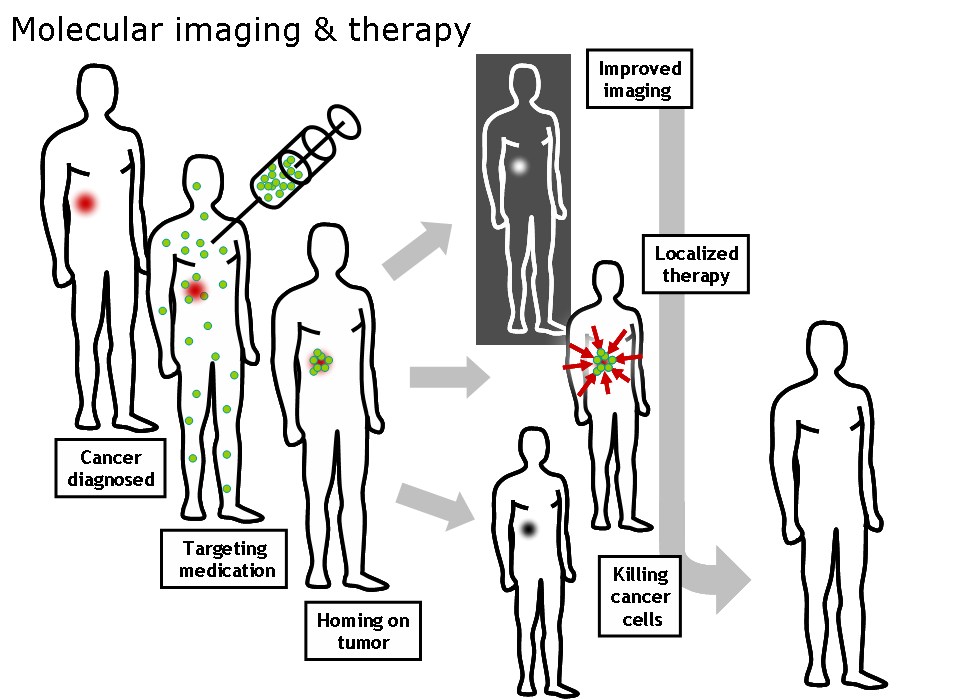
What is Nanomedicine?


Nanomedicine

Nanomedicine is the medical application of nanotechnology. Nanomedicine ranges from the medical applications of nanomaterials, to nanoelectronic biosensors, and even possible future applications of molecular nanotechnology. Current problems for nanomedicine involve understanding the issues related to toxicity and environmental impact of nanoscale materials.


Nanomedicine seeks to deliver a valuable set of research tools and clinically useful devices in the near future. The National Nanotechnology Initiative expects new commercial applications in the pharmaceutical industry that may include advanced drug delivery systems, new therapies, and in vivo imaging. Neuro-electronic interfaces and other nanoelectronics-based sensors are another active goal of research. Further down the line, the speculative field of molecular nanotechnology believes that cell repair machines could revolutionize medicine and the medical field.

Reference: http://en.wikipedia.org/wiki/Nanomedicine

Wednesday, January 5, 2011

Beautiful Message


A Boy was born to a couple after eleven years of marriage. They were a loving couple and the boy was the gem of their eyes. When the boy was around two years old, one morning the husband saw a medicine bottle open.

He was late for office so he asked his wife to cap the bottle and keep it in the cupboard. His wife, preoccupied in the kitchen totally forgot the matter. 


The boy saw the bottle and playfully went to the bottle fascinated by its colour and drank it all. It happened to be a poisonous medicine meant for adults in small dosages. When the child collapsed the mother hurried him to the hospital, where he died. The mother was stunned. She was terrified how to face her husband. 


When the distraught father came to the hospital and saw the dead child he looked at his wife and uttered just five words. 


QUESTIONS:

1. What were the five words?
2. What is the implication of this story?

Scroll down...


down..


..

down...


down...


down...


down...


ANSWER :

The husband just said "I am with you Darling"

The husband's totally unexpected reaction is a proactive behavior. The child is dead. He can never be brought back to life. There is no point
in finding fault with the mother. Besides, if only he had taken time to keep the bottle away, this would not have happened.

No one is to be blamed. She had also lost her only child. What she needed at that moment was consolation and sympathy from the husband.
That is what he gave her.


If everyone can look at life with this kind of perspective, there would be much fewer problems in the world. "A journey of a thousand miles
begins with a single step." Take off all your envies, jealousies, unforgiven, selfishness, and fears. And you will find things are actually not as difficult as you think. 


MORAL OF THE STORY :


Sometimes we spend time in asking who is responsible or whom to blame, whether in a relationship, in a job or with the people we know. By this way we miss out some warmth in human relationship. 

Meatless Wednesday: Curry-Spiced Noodles

Curry Noodles
Curry-Spiced Noodles are exactly the sort of thing you eat when you’ve been holed up in your house since New Year’s Eve because you can’t stop coughing and sneezing, and you are not fit to mix with the general public.

Monday, January 3, 2011

Google Body Browser

Google has recently demoed an interesting WebGL application called Body Browser, which lets you explore the human body just like you can explore the world in Google Earth. Now you can try Google Body Browser before it's added to Google Labs, assuming that you have a WebGL-enabled browser:

* WebGL is available, but not enabled by default in Chrome 8 (the latest stable version). Type about:flags in the address bar, click "Enable" next to "WebGL" and then click on "Restart now". Please note that this is an experimental feature in Chrome 8.
* WebGL is enabled by default in Chrome 9 Beta, Chrome 9 Dev Channel, Chrome Canary Build and Firefox 4 beta.


Damon Hernandez was surprised to notice that the application doesn't require a plugin. "Unlike other web based medical applications I have seen, no Flash, Java, or other plugins are needed. This application will run on any WebGL supported browser. Last year I got the opportunity to work on an open standards based web3D medical app for learning the bones of the body. After witnessing how that app really helped students learn the bones, I am sold on using web3D for medical education."

Google's demo:


Reference: http://googlesystem.blogspot.com/2010/12/google-body-browser.html

Saturday, January 1, 2011

ECG Attachment for Your iPhone

iphonecg.jpg
Seattle, Washington based Alivecor will be showing off its new iPhonECG system at the upcoming Consumer Electronics Show in Las Vegas.
The company has partnered with Oregon Scientific to manufacture the units, which are expected to sell for under $100 a piece.


Link: http://www.alivecor.com/index.htm
Reference: http://www.medgadget.com/archives/2010/12/ecg_attachment_for_your_iphone.html

Continuous ECG Monitoring on an Android Phone

Imec, an electronics research institute out of Leuven, Belgium, has teamed up with the R&D Holst Centre and TASS, a software company out of Augusta, Kansas, to create a mobile and wearable ECG system based around an Android smartphone. It looks like the major achievement was overcoming the power hungry nature of Bluetooth, which was achieved by using a totally different, low power transmission system. Relying on less power should allow for longer continuous monitoring sessions while the patient is going about his day.
From the press release:


The interface is based on a standard Secure Digital Input Output (SDIO) interface on Android mobile phones, enabling the integration of all the features available on Google’s operating system (SMS, e-mail and data transmission over the internet, GPS to track user location). Moreover, the mobile phone’s hardware is extended to operate with low-power communication protocols and low-power radios, enabling long-term medical telemonitoring. As the interface is based on the Linux kernel, the system is also easily portable on other Linux-based devices, such as PDA’s or laptops. And, the system allows configuration of thresholds on the measured parameters and automatic sending of alerts such as SMS messages and e-mails based on these values.


Press release: http://www2.imec.be/be_en/press/imec-news/wirelesshealthnecklaceinterface.html
Reference: http://www.medgadget.com/archives/2010/10/continuous_ecg_monitoring_on_an_android_phone.html

Friday, December 31, 2010

Oracle: Basic Performance Tuning

This is a one page list of simple guidelines to tune SQL without much DBA knowledge.
This is all you need to know to tune some reports from 2 hours (or more) to 20 seconds (or less). I have compiled this list during a report tuning assignment
where I achieved that kind of runtime improvements repeatedly.
There are many more tips but they tend to be more difficult to understand and there are many good books already written about this.
  • Understand the data. Look around table structures and data. Get a feel for the data model and how to navigate it.
  • If a view joins 3 extra tables to retrieve data that you do not need, don't use the view!
  • When joining 2 views that themselves select from other views, check that the 2 views that you are using do not join the same tables!
  • Avoid multiple layers of view. For example, look for queries based on views that are themselves views. It may be desirable to encapsulate from a development point of view. But from a performance point of view, you loose control and understanding of exactly how much task loading your query will generate for the system.
  • Look for tables/views that add no value to the query. Try to remove table joins by getting the data from another table in the join.
  • WHERE EXISTS sub-queries can be better than join if can you reduce drastically the number of records in driver query. Otherwise, join is better.
  • WHERE EXISTS can be better than join when driving from parent records and want to make sure that at least on child exists. Optimizer knows to bail out as soon as finds one record. Join would get all records and then distinct them!
  • In reports, most of the time fewer queries will work faster. Each query results in a cursor that Reports has to open and fetch. See Reports Ref Manual for exceptions.
  • Avoid NOT in or NOT = on indexed columns. They prevent the optimizer from using indexes. Use where amount > 0 instead of where amount != 0.
  • Avoid writing where project_category is not null. nulls can prevent the optimizer from using an index.
  • Consider using IN or UNION in place of OR on indexed columns. ORs on indexed columns causes the optimizer to perform a full table scan.
  • Avoid calculations on indexed columns. Write WHERE approved_amt > 26000/3 instead of WHERE approved_amt/3 > 26000.
  • Avoid this: SUBSTR(haou.attribute1,1,LENGTH(':p_otc')) = :p_otc). Consider this: WHERE  haou.attribute1 like :p_otc||'%'
  • Talk to your DBA. If you think that a column used in a WHERE clause should have an index, don't assume that an index was defined. Check and talk to your DBA if you don't find any.
  • Consider replacing outer joins on indexed columns with UNIONs. A nested loop outer takes more time than a nested loop unioned with another table access by index.
  • Consider adding small frequently accessed columns (not frequently updated) to an existing index. This will enable some queries to work only with the index, not the table.
  • Consider NOT EXISTS instead of NOT IN.
  • If a query is going to read most of the records in a table (more than 60%), use a full table scan.
  • Try to group multiple sub queries into one.

Beyond the Simple stuff ...
  • If you want to actually understand what you are doing, here are a few things that you need to start playing with:
  • Get into EXPLAIN_PLAN. There are multiple way of doing this. The less user friendly is to simply issue this in SQL*Plus: explain plan set statement_id = 'HDD1' for ;
  • Look at the trace from Oracle Reports. It tells you how much time it spends on each query. With r25: C:\ORANT\BIN\R25RUN32.EXE module=p:\old\bcmtrka1_hdd.rdf userid=opps/opps@new tracefile=p:\trace3.txt trace_opts=(trace_all)
  • Use the SQL Trace by issuing an alter session set sql_trace=true; then look at it with TKPROF .trc .lis sort=(EXECPU).

If you remember nothing else ...
  • Don't apply these guidelines blindly, EXPERIMENT: compare one method to another. Do NOT expect that one trick will work all the time.
  • Educate yourself: read, read, read. It SAVES time!
Reference: http://www.iherve.com/oracle/tune100.htm 

Tuesday, December 28, 2010

2010 in photos: BP and climate disasters


OILPOCALYPSE: The growing oil slick in the Gulf of Mexico is captured in this image from NASA’s (MODIS) instrument aboard the Terra satellite. This natural-color image acquired April 29, 2010 shows a twisting patch of oil nearly 125 km (78 mi) wide. Approximately 4 million barrels (170 million gallons) were released overall. (NASA Earth Observatory/Jesse Allen/University of Wisconsin SSEC)
The headlines of 2010 were driven by fossil fuel disasters — involving the dangers of extraction or the biblical might of the climate they have polluted. Hundreds of thousands of people died in climate disasters, and hundreds of millions more affected by floods, droughts, storms, and wildfires. Below is a small selection of the most striking and iconic news photography of 2010, from the BP disaster to the Pakistan floods, from Wonk Room’s Brad Johnson.
Meanwhile, polluters successfully blocked enactment of climate policy or oil industry regulation in the United States, as the Obama administration advanced health care reform and other legislative priorities.

OILPOCALYPSE: In this aerial photo taken in the Gulf of Mexico more than 50 miles southeast of Venice on Louisiana’s tip, the Deepwater Horizon oil rig is seen burning Wednesday, April 21, 2010. Eleven men working on the platform were killed, and 17 others injured. (AP Photo/Gerald Herbert)

Friday, December 24, 2010

What is the difference between Linux and Unix?

Linux and Unix 

Unix is popular operating system, developed by AT&T in 1969 and it has been very important to the development of the Internet. It is a multi-processing, multi-user, family of operating systems that run on a variety of architechtures. UNIX allows more than one user to access a computer system at the same time.
A widely used Open Source Unix-like operating system kernel. Linux was first released by its inventor Linus Torvalds in 1991. Combining the Linux kernel with the GNU software forms the basis of the operating system family generally known as 'Linux'. There are distributions of GNU/Linux for almost every available type of computer hardware from desktop machines to IBM mainframes. The inner workings of GNU/Linux are open and available for anyone to examine and change as long as they make their changes available to the public, as set out in the terms of the GNU General Public License. Because of its robustness and availability, Linux has won popularity in the Open Source community as well as among commercial application developers.
Here is more input:
  • Unix requires a more powerful hardware configuration. It will work in large mainframe computers but will not work in an x86 based personal computer. Linux however, (which is built on the concept of Unix) has small hardware requirements and it will work on both a large mainframe computer and an x86 based personal computer.
  • Unix is an Operating System developed in olden days in which the kernel, the heart of the OS, interacts directly with the hardware. (note: this is the definition of what a kernel is). Because UNIX treats everything as a file, it provides greater security for users. An example of a UNIX distribution is posix. (note: actually POSIX is a set of standards for interoperability of applications between UNIX and UNIX-like systems). Linux uses a the UNIX architecture as its basis and provides more facilities and applications. Linux could be considered to be a GUI to the UNIX core. (note: this is plain wrong. GNU/ Linux was rewritten from scratch using UNIX as a guide. GNOME and KDE are GUIs for GNU/Linux). Examples of Linux distributions are Redhat, Fedora, Susee, Mandriva, and Ubuntu. Solaris OS also uses the UNIX kernal almost all UNIX commands will work on solaris in addition to 500 Solaris specific commands. (note: Solaris is also a rewrite of UNIX for x86, and does not use any original UNIX code). Both UNIX and LINUX are Open source. (note: UNIX is proprietary, Linux is open source)
  • Unix is the foundation for a number of operating systems, with Linux being the most popular one. Novell and Free BSD are 2 other commonly used Unix varients.(note: Again, the BSD family are based on another rewrite of UNIX for x86, UNIX is not their foundation in the sense implied here)
  • UNIX is an operating system created in the early days of computers. More recently, Linux was created as an open-source, freeware operating system. (note: Linux is free software, not freeware. Free software is open source that insists any developer reusing code releases their own work as free software. Freeware is proprietary software distributed at no cost [gratis]) It is "UNIX-LIKE", meaning that it uses many UNIX constructs but also departs from traditional UNIX in many ways. Like UNIX, Linux is faster than many of the other commercially available operating systems. (note: This is a sweeping generalization and depends on the hardware used, and what servers and applications are running) It appears to also be far more robust than any of the Microsoft products. Linux is being used in many time critical applications because of it's speed. It is also used in many applications that need to maintain uptime because Linux, like UNIX, can run for months at a time without rebooting. While the typical method of solving Microsoft problems is to "reboot", that particular requirement does not seem to be appropriate in a Linux/Unix environment. While UNIX has created a windows-like work environment, Linux has improved greatly on that concept. Linux has become a real player in the consumer operating system market... and it's free. While you may want to pay for a Linux distribution, the actual code is free and you are allowed to load it on as many machines as you want. You can get Linux for free if you wish to load it across the internet. 
Some other way to express difference 


Unix :
A Operating System developed in olden days in which kernel interacts directly with the hardware.kernal is consider to be heart of this os.
In this Operating system everything is considered as a file,provides greater security.
Ex: posix
Linux :
Linux is an Operating system which use unix as its base and gives further more facilities and applications.
Merely speeking GUI is made in linux having unix as its core.
Ex: Redhat, Fedora, Susee, Mandrake . . .
Solaris OS also using the same unix kernal all the unix commands will work on solaris and have 500 more solaris specific commands. Differnent organizations used the UNIX kernal and added their own essence to form their own version of linux.
Both UNIX and LINUX are Open source


Friday, December 3, 2010

What Is GPRS and How GPRS Works? (GPS vs GPRS)

This article will discuss the technology behind GPRS to help give you a better understanding on how GPRS works.

GPS vs GPRS

GPS and GPRS are far different when it comes to functionality even though there's only one letter that differ. As a technology, GPS stands for Global Positioning System which can track different sites on Earth as it receives data from satellites, while GPRS connects with the cell sites for signals to provide service for cellular phones.

So what does GPRS stands for?

What is GPRS?


GPRS stands for General Packet Radio Service. It is a non-voice wireless Internet technology that is very popular due to the fact that it can support both phone calls and Internet data transmission. Some GSM, or Global System for Mobile Communications, mobile phones can even handle both phone communication and Internet access at the same time. It transmits data packets on GSM systems where cell phone channels are shared.

How Does GPRS Work?

In GSM cell phone systems, there will always be idle radio capacity. This is the capacity of a network provider that is not being used and it stays unused until other cell phone users decide to make phone calls. GPRS uses this idle radio capacity to establish a data network to be used for data transmission. If a network provider's idle radio capacity decreases, which means a lot of phone calls are being serviced, data transmission and speed decreases as well. Cell phone calls have a higher priority than Internet data transmission in cell phone network providers.

Packets

Due to its packet-based nature, which means it transmits data as a series of data packets routed through multiple paths across a GSM network, GPRS does not require a network to have continuous data transmission. This data transmission can share network radio channels easily and efficiently. These network radio channels have 8 time slots each and their maximum data transmission is 13.4 kbps. Every time slot that is not being used can be used by GPRS to transmit data packets. In a best case scenario, user can experience a GPRS data rate of approximately 170 kbps per network radio channel. In this scenario, only data transmissions are using the network channels without voice calls hogging the network.

Radio Channels

A GSM radio transceiver uses time division multiplexing to make 8 time slots possible for each radio channel. These channels are used by cell phone users for voice calls and data transmission in maximum effect if conditions are right like if there is no interference from nearby GSM cell towers, there are enough radio transceivers and there is a strong radio infrastructure. GPRS uses idle capacity in these radio channel time slots to accommodate data transmission.

How Does GPRS Work to Optimize Bandwidth?

When multiple channels are being used by voiced calls, GPRS combines these channels to make use of the unused capacity. This joining of multiple voice channels gives users higher bandwidth for data connections. The number of channels and the amount of capacity of a cell phone network remains the same but the bandwidth can now be allowed to reach its full potential by servicing both voice calls and data transmission all at the same time using the same channels.

GPRS technology is an elegant solution for network providers to offer additional services with minimal effort. Cell phone network providers only need to set up a few new infrastructure nodes plus some software upgrades while still using their existing GSM network infrastructure to add an overlay GPRS network to their cell phone service.

Reference: http://www.brighthub.com/electronics/gps/articles/73072.aspx

Wednesday, December 1, 2010

Seagate's New 3 TB External Drive


Not so long ago, well, maybe 15 year, but that's still not so long, a 1 GB hard drive was a real luxury. Heck, I can remember trying to decide if I should spend the extra money to upgrade to a 512 MB hard drive not so long ago. Now computers come with 4 GB or RAM alone, and storage is off the charts.

Thursday, November 25, 2010

November 26th This day in History

November 26th
What Happened on This day in History


Egypt
1922 Egypt King Tut's Tomb

26th November, 1922 : The British Lord Carnarvon and the archaeologist Howard Carter enter King Tut's tomb which had been buried by the sands of the Egyptian desert for thousands of years before its discovery by Carter a few days before, He had waited until his partner Lord Carnarvon could fly from England to enter. Many believe to this day that King Tut's tomb is the greatest archaeological discovery of our time as it had not been discovered earlier as many tombs has and plundered of it's fantastic treasures. Both of these great men died within 7 months of entering the Tomb which helped to perpetuate the myth of the ( Mummy's Curse ) .


U.S.
1942 U.S.A. "Casablanca"

26th November, 1942 : "Casablanca," set in the Vichy-controlled Moroccan city of Casablanca during World War II, starring Humphrey Bogart and Ingrid Bergman, has its world premiere at the Hollywood Theater in New York. The movie goes on general release in January the following year. The film was nominated for eight Oscars and wins 3 Oscars including Best Picture.


Wednesday, November 24, 2010

Dancing With The Stars 2009 Winner Donny Osmond - 1st Dance

Dancing With The Stars 2009 Winner Donny Osmond - 1st Dance


If you want to dance like the winner of Dancing With the Stars 2009 Donny Osmond!
This is the best self-coaching course around, check it out to become the next Dancing With the Stars Winner!

Tim Burton's Vincent

It was made on 1982. Enjoy it.


The Official Tim Burton Website,Tim Burton, Tim Burton's Art
www.timburton.com


Edward Scissorhands (Trailer)
A Johnny Depp-Tim Burton film. 1990


Michael L Brea

http://goo.gl/y2XTV michael brea ugly betty Michael Brea has been taken into custody for as brutal a crime as we can possibly imagine: the actor allegedly chopped off his mother's head with a sword.


Click our link http://bestmoviesnews.com/?p=69/ to watch Ugly Betty' Actor Suspected of Murdering Mother With Samurai Sword video free

Ugly Betty actor Michael Brea, took a sword to his mother this morning after yelling at her to "repent!" Some sources report that Brea actually decapitated his mother. Brea was an aspiring actor and once played a small part in the Ugly Betty sitcom.